

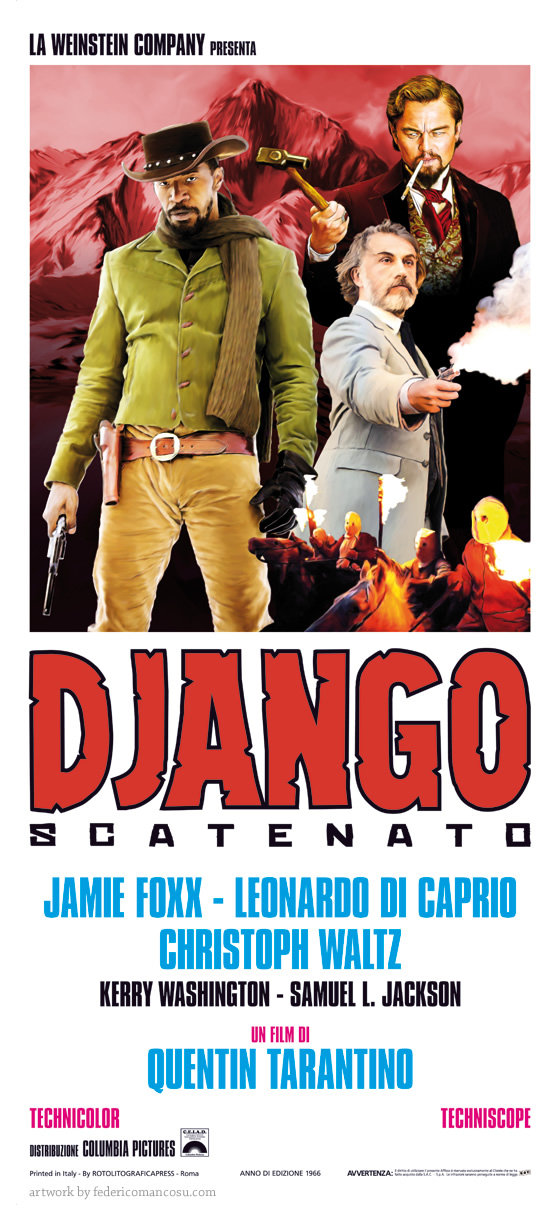
I think its fair to say that Django Unchained represents Quentin Tarantino’s entry into the Western cannon or rather the Spaghetti Western cannon. It’s a Western that takes the slave trade as its setting and the journey of Django as its story.
Tarantino is the master of imprinting a genre with his own DNA and Django Unchained is undoubtedly a Tarantino movie in its style, dialogue and invention.
I chose to see it in 35mm at The Everyman Screen on the Green and if it was Tarantino’s intention to create a movie that looks like a classic widescreen Western he achieves his ambition perfectly. As per usual there is a great soundtrack and the production values are spot on. If you get the chance to see it in it's natural 35mm glory I urge you to do so.

Christoph Malz is a magnetic cinematic presence as bounty hunter Doctor King Schulz and he becomes Obi Wan Kenobi to Jamie Foxx’s Skywalker: although in many ways he has more in common with Hans Solo.
Leonardo di Caprio plays a villain who is bereft of any redeeming features and Samuel L Jackson not only looks like the generic Uncle Tom figure but also plays the compliant house slave to Di Caprio’s Calvin Candie as a cross between the unseen Maid from Tom & Jerry and a judgemental father figure.
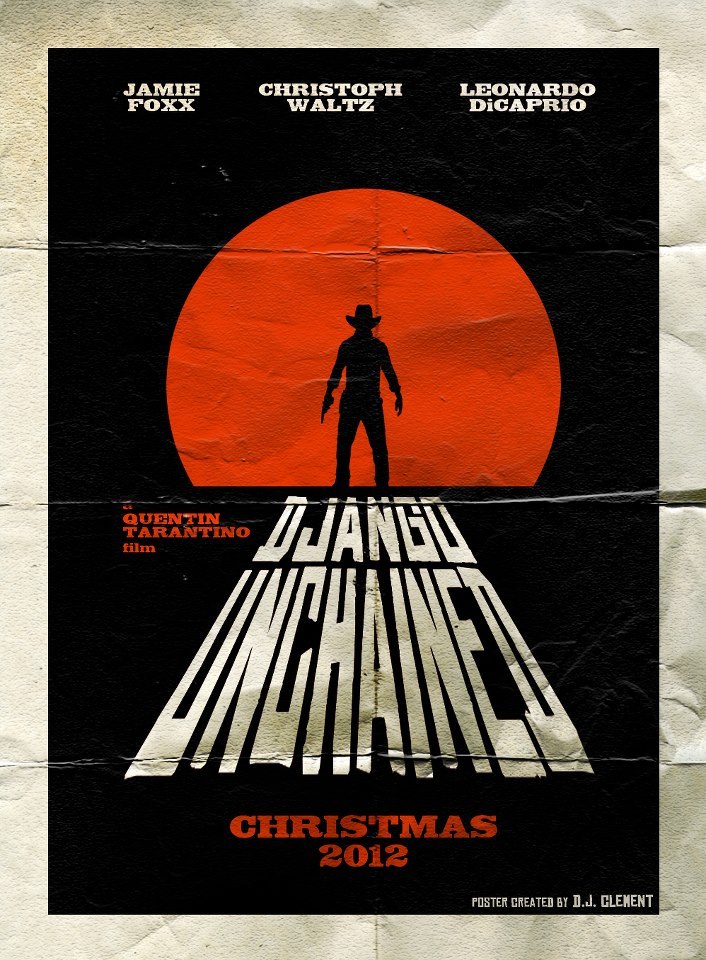
Django Unchained does feature stylised violence, which, predictably enough, has promoted mild hysteria, yet it is no more than that of Peckinpah or DePalma.
There is an intrinsic humour in many scenes, which is a counterbalance to the genuinely upsetting depiction of the treatment of slaves. Django’s retribution on those guilty of benefitting from slavery is swift and brutal, in fact both Django and King Schulz have a default position for dealing with bad people: kill them.
It continues the traditions of the revenge Western and Korean movies such as Oldboy, Lady Vengeance and Sympathy for Mister Vengeance. Django’s vengeance is not so much against individuals that have wronged him but rather revenge on the whole rotten and barbaric institution of slavery.





0 Yorumlar